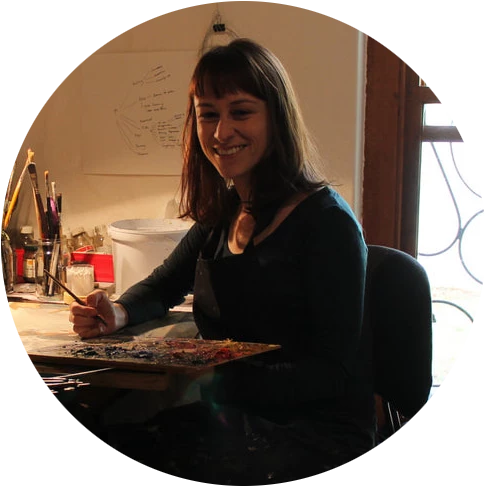
I am in the lucky class of humans that have the liberty to listen to music with a bit more attention. That is because my work as a painter allows me to employ visual and auditory senses (and sense-making) at the same time. Not all artists are the same, but in my case the quality of my auditory input is more or less equivalent to the rate of my productivity and enjoyment at the easel.
Having no streaming capability, i.e. internet and signal, where I paint is a wonderful thing, as it forces me to intentionally download what I want to listen to beforehand. Currently, I download one or two albums to my phone (some suggested by Otto, thanks Otto) which I listen to ‘in one sitting’ as I paint. After the last song on an album, as when a good book ends, a sadness lingers. The unexpected melancholy I felt at the end of Chrysaline by Josh Garrels made me reflect on the ontology of “albums” and on some of the formational influences it might have on us as listeners.
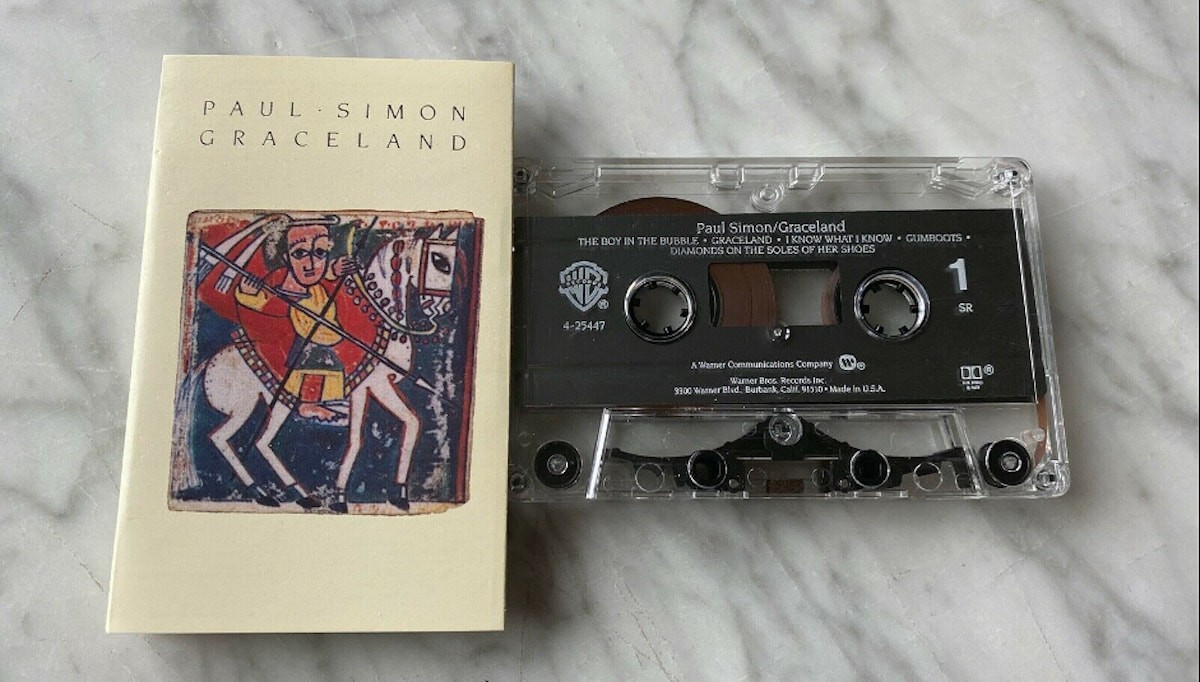
A lot has changed since the plastic encased compact disk with paper-stapled booklet inside that is so characteristic of the “album”. I am a nineties baby and saw in my short lifetime the advent and/or extinction (and partial comeback) of LP Vinyls, compact cassettes and CD’s, Walkmans, radios and Ipods. Like most music lovers I know these days, I now use a subscription based music platform hosted on the internet and played via smartphone.
The advent of online streaming has created new opportunities for musicians to release music to the world. Yet the old distinctions between Albums, EP,s and singles remain. In the UK, today, the criteria for a recording to count as an “album” is that it should have more than 4 tracks or last longer than 25 minutes. There is little formal enforcement of this rule, but in the fluidity of the music industry today, pigeonholes and ‘markers’ like these create continuity and structure.
Classical compositions, of course, weren’t written to fit onto albums. Instead, they were composed for the occasion of their performance. Music was composed to accompany a mass or to be played at court or at a coronation. An opera can last anything from 1.5 to 5 hours or longer, and an average sonata span anything from 10 to 50 minutes (when I googled this I found: the sonata can last for 200 000 miles before giving engine problems, thanks Hyundai).
My praise for albums consists in two commonplace, but noteworthy things. Firstly, I have found that the traditional album format offers me a healthy, alternative to infinite scrolling that marks our media-saturated culture*. When painting, the melancholy but inevitable last song on the album signals the time when I need to take a break. In fact, most albums last exactly the amount of time that I can be creatively, intensively busy at the easel. Then I take off my headphones, put down my brushes and either go for a short walk in the garden or make a cup of tea.
Having few such-like endings in our lives and few rites of passage in general, I think the end of an album signifies something season-like, exactly what infinite scrolling does not. It reminds us that endings are normal, that cycles of productivity are followed by cycles of rest.
Another reason for my appreciation of albums is that singles, like single paintings, are rarely capable of sounding the depths of whole albums. On an album the creative person gets to approach a theme or subject from multiple angles, wrestling with it over a longer period of time. The same applies to the visual arts. Working towards a solo exhibition, as I’m attempting to do at the moment, invites the artist to chew on their theme for months whereas a single work might take only a few weeks to create. It forces the artist to push through and wait out the frustration of complexity. The blessing of it lies in the fact that the weaker songs on the album (or paintings in the exhibition) become absorbed and redeemed in the layered story of the whole.
This is a quote
I am in the lucky class of humans that have the liberty to listen to music with a bit more attention. That is because my work as a painter allows me to employ visual and auditory senses (and sense-making) at the same time. Not all artists are the same, but in my case the quality of my auditory input is more or less equivalent to the rate of my productivity and enjoyment at the easel.
Having no streaming capability, i.e. internet and signal, where I paint is a wonderful thing, as it forces me to intentionally download what I want to listen to beforehand. Currently, I download one or two albums to my phone (some suggested by Otto, thanks Otto) which I listen to ‘in one sitting’ as I paint. After the last song on an album, as when a good book ends, a sadness lingers. The unexpected melancholy I felt at the end of Chrysaline by Josh Garrels made me reflect on the ontology of “albums” and on some of the formational influences it might have on us as listeners.
A lot has changed since the plastic encased compact disk with paper-stapled booklet inside that is so characteristic of the “album”. I am a nineties baby and saw in my short lifetime the advent and/or extinction (and partial comeback) of LP Vinyls, compact cassettes and CD’s, Walkmans, radios and Ipods. Like most music lovers I know these days, I now use a subscription based music platform hosted on the internet and played via smartphone.
The advent of online streaming has created new opportunities for musicians to release music to the world. Yet the old distinctions between Albums, EP,s and singles remain. In the UK, today, the criteria for a recording to count as an “album” is that it should have more than 4 tracks or last longer than 25 minutes. There is little formal enforcement of this rule, but in the fluidity of the music industry today, pigeonholes and ‘markers’ like these create continuity and structure.
Classical compositions, of course, weren’t written to fit onto albums. Instead, they were composed for the occasion of their performance. Music was composed to accompany a mass or to be played at court or at a coronation. An opera can last anything from 1.5 to 5 hours or longer, and an average sonata span anything from 10 to 50 minutes (when I googled this I found: the sonata can last for 200 000 miles before giving engine problems, thanks Hyundai).
My praise for albums consists in two commonplace, but noteworthy things. Firstly, I have found that the traditional album format offers me a healthy, alternative to infinite scrolling that marks our media-saturated culture*. When painting, the melancholy but inevitable last song on the album signals the time when I need to take a break. In fact, most albums last exactly the amount of time that I can be creatively, intensively busy at the easel. Then I take off my headphones, put down my brushes and either go for a short walk in the garden or make a cup of tea.
Having few such-like endings in our lives and few rites of passage in general, I think the end of an album signifies something season-like, exactly what infinite scrolling does not. It reminds us that endings are normal, that cycles of productivity are followed by cycles of rest.
Another reason for my appreciation of albums is that singles, like single paintings, are rarely capable of sounding the depths of whole albums. On an album the creative person gets to approach a theme or subject from multiple angles, wrestling with it over a longer period of time. The same applies to the visual arts. Working towards a solo exhibition, as I’m attempting to do at the moment, invites the artist to chew on their theme for months whereas a single work might take only a few weeks to create. It forces the artist to push through and wait out the frustration of complexity. The blessing of it lies in the fact that the weaker songs on the album (or paintings in the exhibition) become absorbed and redeemed in the layered story of the whole.
Trying to do a quote in markdown